The Science Behind Big Little Worlds
Why This Matters
The biggest driver of learning isn't ability — it's personal connection.
"Over 70% of kids say they enjoy books more when they relate to the characters, yet only ~30% read frequently for fun. The gap isn't ability — it's engagement."
What the research says
The evidence is clear
Relatability drives understanding
Children show higher comprehension and recall when stories include familiar elements.
— Child Development, 2019
Self-relevance changes how kids read
Kids engage longer and process information more deeply when content reflects their own lives.
— Journal of Educational Psychology
Reading frequency drives outcomes
Kids who read frequently are twice as likely to be proficient readers.
— Scholastic
Kids prefer relatable stories
Over 70% of children enjoy books more when they can relate to the characters.
— Scholastic Kids & Family Reading Report
Representation fuels motivation
Children who see themselves in books are more likely to read for fun.
— National Literacy Trust
Early exposure compounds
Children exposed to frequent reading hear ~1.4 million more words by kindergarten.
— American Academy of Pediatrics
Our approach
The Case for Identity-Based Learning
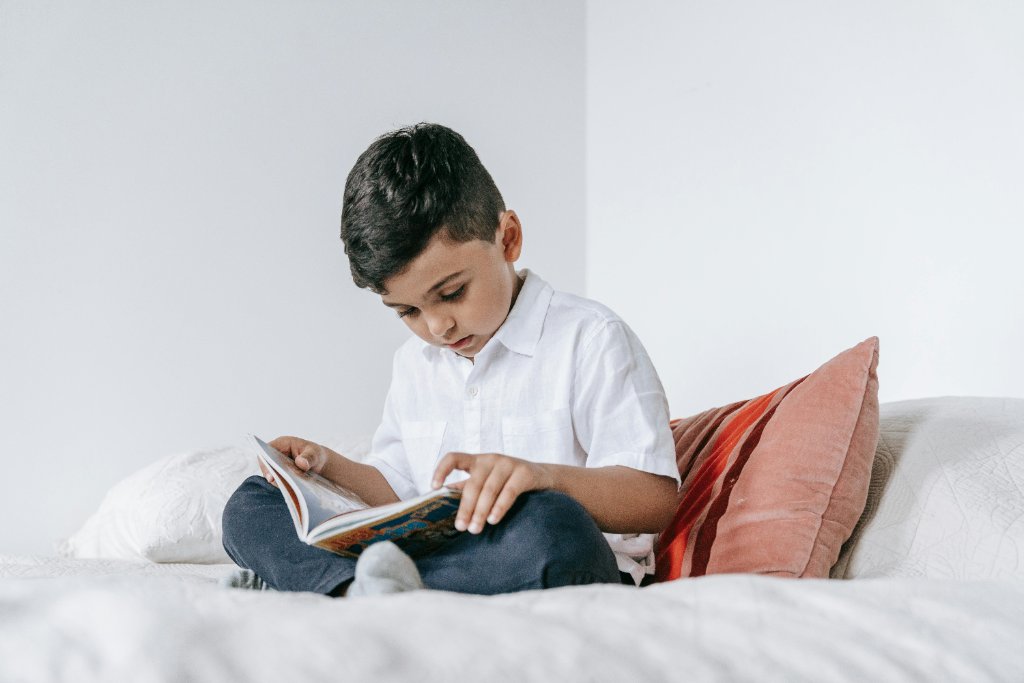
Children don't disengage because they can't learn — they disengage because the content doesn't feel relevant to them. When a child sees themselves as the hero of the story, something shifts. They lean in. They ask questions. They remember.
Big Little Worlds is built on this principle: personalization drives engagement, engagement drives frequency, and frequency drives lasting developmental outcomes. Every book we create is designed to close that loop — one child at a time.